Female to Male (FTM) Top Surgery
Gender-affirming chest surgery tailored to your anatomy, goals and transition journey.
What is Female-to-Male Chest masculinisation surgery?
FTM top surgery (chest masculinisation surgery) is a gender-affirming procedure that removes breast tissue and reshapes the chest to create a flatter, more masculine contour.
Every person's transition journey is unique. Dr Katie-Beth Webster works closely with each patient to understand their goals, explain the available surgical techniques and develop an individualised treatment plan tailored to their anatomy and desired outcome.
What you can expect
Every patient's journey is unique, but understanding what to expect can help you feel more confident and prepared. From your initial consultation through to your recovery, Dr Katie-Beth Webster and her team are committed to providing personalised care, clear communication and ongoing support at every stage of your surgical journey.
-
Your consultation is an opportunity to discuss your goals, ask questions and determine the most appropriate surgical approach for your individual anatomy and desired outcome. Dr Katie-Beth Webster will assess your chest, review your medical history, explain the available surgical techniques and discuss the expected results, recovery and potential risks. Together, you'll develop a personalised surgical plan tailored to your transition journey.
-
FTM top surgery is performed under general anaesthetic using the technique best suited to your anatomy and goals. Depending on factors such as chest size, skin quality and desired outcome, this may involve a double incision with free nipple grafts or a periareolar approach. Throughout the procedure, every effort is made to achieve a natural-looking, masculine chest contour while preserving both function and aesthetics wherever possible.
-
Recovery is a gradual process, with regular follow-up appointments to monitor healing and support you throughout each stage. Most patients wear a compression garment for approximately 4–6 weeks and can return to light daily activities within the first few weeks. As swelling settles and healing progresses, you'll receive personalised guidance on returning to work, exercise and other activities based on your recovery.
Outpatient or one-night stay
Compression garment worn continuously for 4–6 weeks to reduce swelling and support chest contour
Drain tubes (if used) removed after several days
Return to light activity within 1–2 weeks; avoid heavy lifting or chest exercise for 6 weeks
Swelling and tightness gradually subside over several months
Why choose Dr Katie-Beth Webster?
Choosing gender-affirming surgery is a significant and deeply personal decision. Dr Katie-Beth Webster combines specialist plastic surgery expertise with an individualised, evidence-based approach to gender-affirming care. Every consultation is tailored to the patient's anatomy, goals and transition journey, with a focus on achieving natural, functional outcomes while providing compassionate support throughout the surgical process.
Considering FTM top surgery?
Choosing gender-affirming surgery is a significant and personal decision. Whether you're ready to proceed or simply exploring your options, a consultation provides the opportunity to discuss your goals, understand the available surgical techniques and ask any questions you may have.
Dr Katie-Beth Webster provides compassionate, evidence-based care tailored to every patient's individual journey. Dr Katie-Beth Webster offers FTM Top Surgery consultations in Melbourne, with appointments available in Box Hill and East Melbourne.
Common questions about FTM top surgery
-
FTM top surgery may be suitable for transgender men and non-binary people seeking a flatter, more masculine chest contour. Suitability is determined by your individual anatomy, overall health, skin quality and personal goals rather than any single criterion.
During your consultation, Dr Katie-Beth Webster will take the time to understand your transition journey, assess your chest anatomy and discuss the surgical options that may be appropriate for you. Together, you'll develop a personalised treatment plan tailored to your desired outcome.
A referral from your GP is required prior to your consultation. Depending on your individual circumstances, additional supporting documentation may also be required in accordance with current clinical guidelines.
-
There is no single surgical technique that is right for every patient. The most appropriate approach depends on your chest size, skin quality, nipple position and desired outcome. During your consultation, Dr Katie-Beth Webster will assess your anatomy and recommend the technique most likely to achieve the safest and most natural-looking result.
Double incision mastectomy
This technique is generally recommended for patients with a moderate to large chest or excess skin.
Horizontal incisions are placed along the lower pectoral border.
Breast tissue and excess skin are removed.
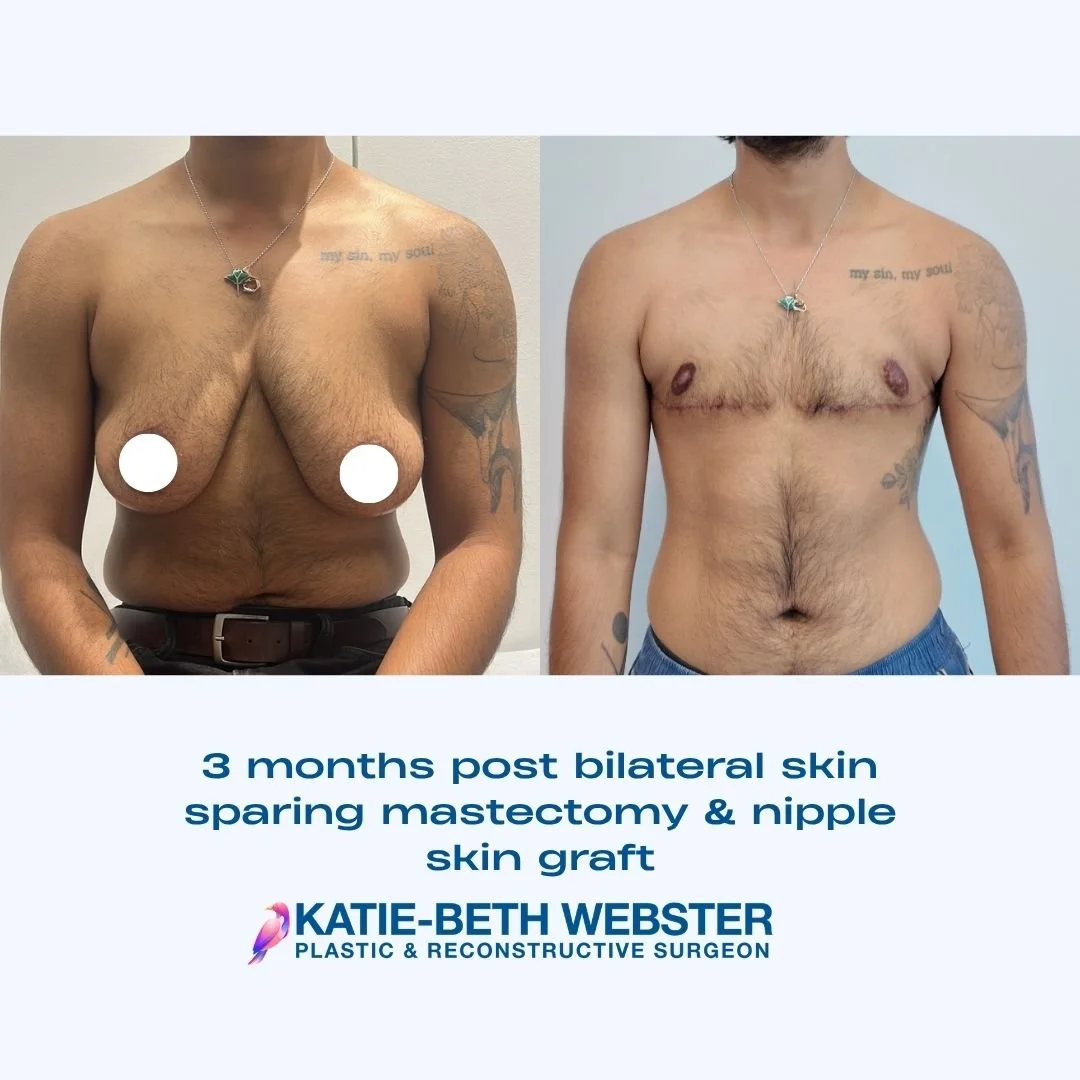
The nipples are resized and repositioned using free nipple grafts to create a more masculine appearance.
Periareolar (keyhole) technique
This technique may be suitable for patients with a smaller chest and good skin elasticity.
Incisions are made around the edge of the areola.
Breast tissue is removed using direct excision and/or liposuction.
The natural nipple attachment is preserved, resulting in less visible scarring.
FTM top surgery is performed under general anaesthetic and typically takes 2–4 hours, depending on the surgical technique and individual circumstances.
-
Not every patient requires nipple grafts. Whether they are recommended depends primarily on the surgical technique selected and your individual anatomy.
For patients undergoing a double incision mastectomy, free nipple grafts are commonly used to reposition and resize the nipples to create a more masculine chest contour. Patients who are suitable for periareolar or keyhole techniques may be able to preserve the natural nipple attachment, meaning grafts are not required.
During your consultation, Dr Katie-Beth Webster will explain which approach is most appropriate for you, including the expected aesthetic outcome, nipple sensation and any potential risks associated with each technique.
-
The aim of FTM top surgery is to create a flatter, more masculine chest contour that aligns with your anatomy and transition goals. While every patient's result is unique, surgery is carefully planned to achieve the most natural-looking outcome possible.
Following surgery, you can generally expect:
A flatter, more masculine chest contour with improved body congruence.
Scars positioned along the natural pectoral border or around the areola, depending on the surgical technique used.
Some changes in nipple sensation, which are common and may be temporary or permanent.
Swelling to gradually improve over the weeks following surgery, with your final chest contour typically becoming apparent after 3–6 months.
Scars continue to mature and soften over 12–18 months, and Dr Katie-Beth Webster will provide personalised guidance on scar management throughout your recovery.
-
Yes. Testosterone therapy is not a requirement for FTM top surgery. Many patients choose to undergo surgery before commencing hormone therapy, while others may decide not to take testosterone at all.
Eligibility for surgery is based on your individual anatomy, overall health and surgical goals rather than hormone use alone. During your consultation, Dr Katie-Beth Webster will discuss your transition journey, explain any factors that may influence surgical planning and recommend the most appropriate approach for your circumstances.
If you're unsure whether you're ready for surgery, a consultation can also provide an opportunity to explore your options and understand the different pathways available.
-
Yes. Testosterone therapy is not a requirement for FTM top surgery. Many patients choose to undergo surgery before starting hormone therapy, while others may decide not to take testosterone at all.
Eligibility for surgery is based on your individual goals, anatomy and overall health rather than hormone use. During your consultation, Dr Katie-Beth Webster will discuss your transition journey and recommend a personalised surgical approach based on your circumstances.
-
![]()
Bilateral Skin Sparing Mastectomy & Nipple Graft
-
![]()
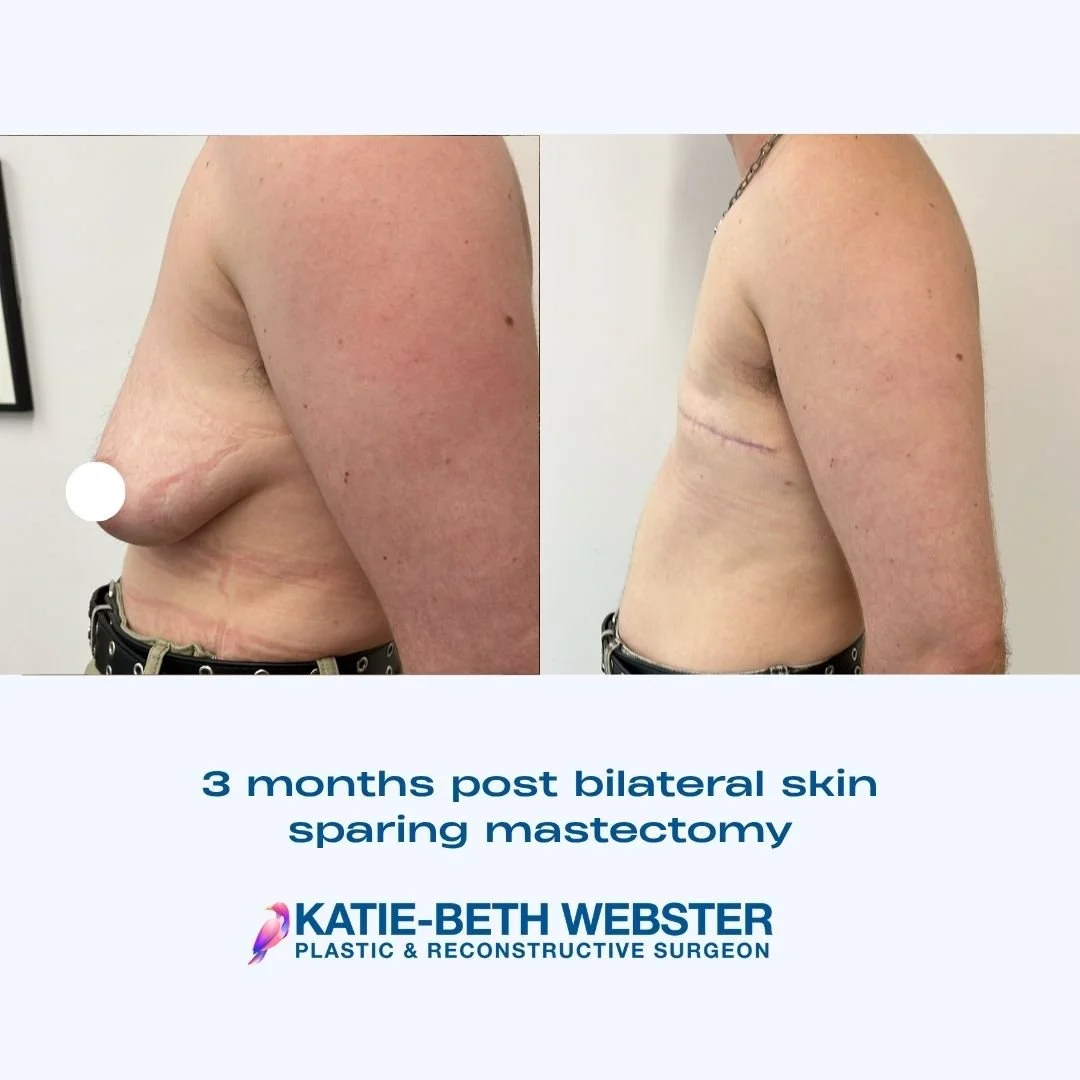
Bilateral Skin Sparing Mastectomy
-
![]()
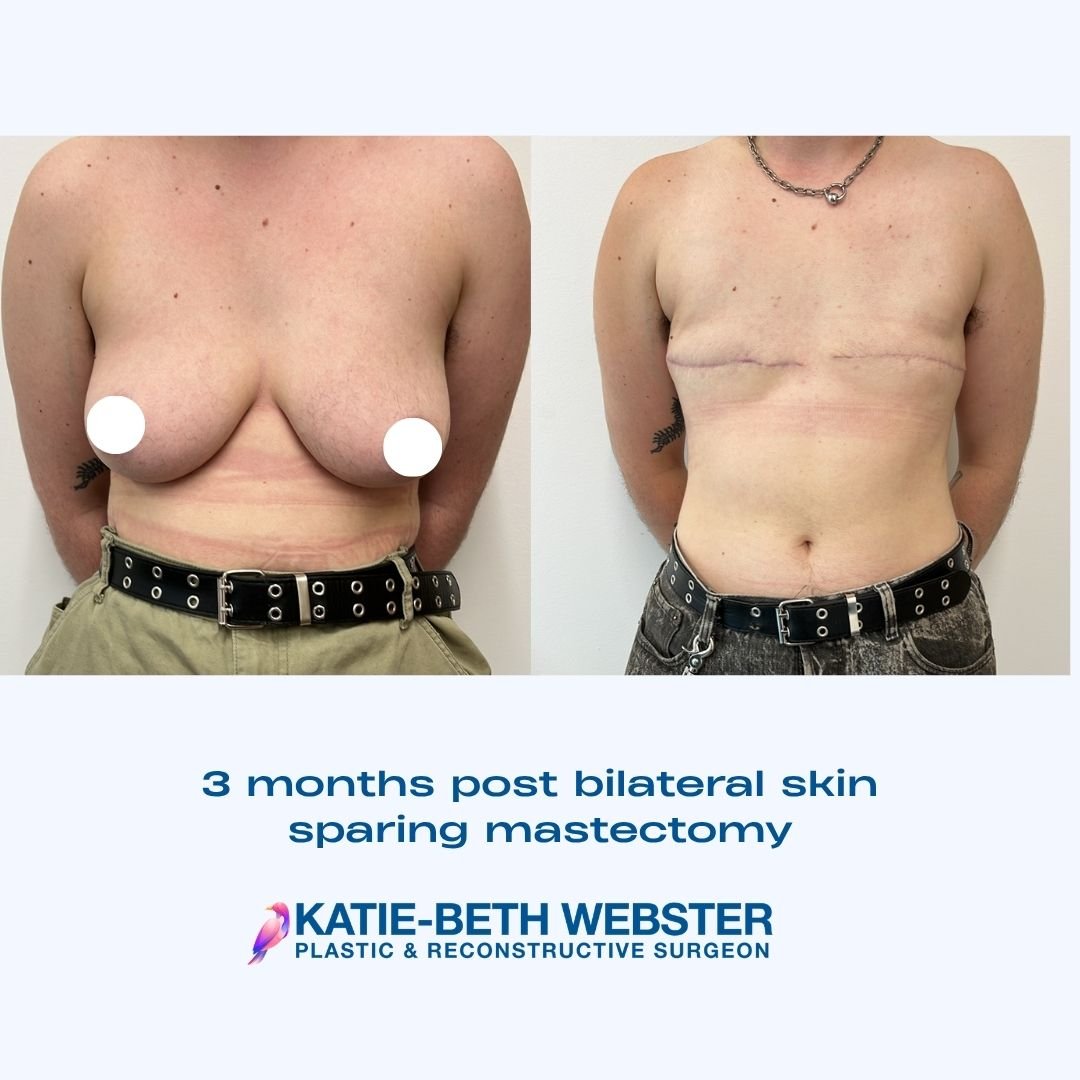
Bilateral Skin Sparing Mastectomy