Blepharoplasty
Personalised eyelid surgery designed to address excess skin, puffiness and changes around the eyes while preserving your natural eye shape.
What is a blepharoplasty?
Blepharoplasty, also known as eyelid surgery, is a procedure that addresses excess skin, prominent fat and other structural changes affecting the upper eyelids, lower eyelids or both.
Upper eyelid changes may create a heavy or hooded appearance and can sometimes interfere with peripheral vision. Lower eyelid changes may contribute to under-eye bags, puffiness, loose skin or an uneven transition between the eyelid and cheek.
Treatment is planned carefully because the appearance of the eye area can also be influenced by brow position, skin quality, facial volume and the support of the lower eyelid.
Dr Katie-Beth Webster will assess the eyelids and surrounding facial structures before recommending an approach tailored to your anatomy, symptoms and treatment goals.
Is blepharoplasty right for me?
Blepharoplasty may be considered if you are concerned about:
heavy or hooded upper eyelids
excess upper-eyelid skin
upper-eyelid skin affecting comfort, makeup application or peripheral vision
under-eye bags or puffiness
loose or creased lower-eyelid skin
eyelid asymmetry
changes around the eyes that are not adequately addressed by non-surgical treatments
Not every concern around the eyes is caused by the eyelids themselves. A low brow position, forehead descent, skin texture or volume loss through the tear trough and cheek may contribute to a similar appearance.
During your consultation, Dr Webster will assess what is causing the changes you have noticed and whether eyelid surgery, another treatment or a combination of approaches is likely to be most appropriate.
Upper or lower blepharoplasty?
Upper Blepharoplasty
Upper blepharoplasty removes a carefully planned amount of excess upper-eyelid skin. In selected patients, a conservative amount of underlying fat or muscle may also be treated.
The incision is generally placed within the natural upper-eyelid crease so the scar is less noticeable once healed.
The procedure may be considered for hooding, heaviness, loss of the natural eyelid crease or skin that interferes with the upper field of vision.
Careful planning is important to avoid removing too much tissue or creating a hollow or over-operated appearance.
Lower blepharoplasty
Lower blepharoplasty may address under-eye bags, prominent fat, loose skin or structural changes affecting the transition between the lower eyelid and cheek.
Depending on your anatomy, surgery may involve removing or repositioning fat, conservatively treating excess skin and supporting or tightening the lower eyelid.
The incision may be positioned just beneath the eyelashes or inside the lower eyelid. The appropriate approach depends on whether the primary concern is puffiness, skin laxity, hollowing or a combination of these factors.
Lower-eyelid surgery requires particularly careful assessment because excessive skin removal or inadequate support can alter the position and shape of the eyelid.
Your blepharoplasty journey
Every blepharoplasty is planned around the individual anatomy of the eyelids and surrounding face. Understanding the consultation, procedure and recovery process can help you feel better prepared and establish realistic expectations for how the area will change as it heals.
-
Your consultation begins with a discussion about the changes you have noticed and what you would like treatment to achieve.
Dr Webster will assess the upper and lower eyelids, brow position, eyelid crease, skin excess, fat prominence, symmetry, lower-eyelid support and the relationship between the eyelids and cheeks.
Your eye health is also important. You will be asked about dry or irritated eyes, contact-lens use, previous eye or facial procedures, vision concerns and relevant conditions such as thyroid or eye disease. Your medications, smoking status and general medical history will also be reviewed.
Where upper-eyelid skin may be affecting peripheral vision, further assessment or visual-field testing may sometimes be required.
Dr Webster will then explain whether upper blepharoplasty, lower blepharoplasty or another treatment is likely to be most appropriate, along with the anticipated scars, recovery, risks and limitations.
-
Blepharoplasty may be performed under local anaesthesia, sedation or general anaesthesia, depending on the areas being treated and the individual surgical plan.
For upper blepharoplasty, the incision is usually placed within the natural eyelid crease. Excess skin is carefully removed, with treatment of fat or muscle only where appropriate.
Lower blepharoplasty may use an incision just beneath the eyelashes or inside the lower eyelid. Fat may be removed or repositioned, and the eyelid may require additional support or tightening.
Upper and lower eyelid surgery may be performed separately or during the same operation. The procedure length and whether you return home the same day will depend on the extent of treatment and anaesthesia used.
-
Swelling, bruising, tightness and temporary irritation are expected after eyelid surgery. The eyes may initially feel dry, watery, sensitive to light or more tired than usual.
Bruising and swelling are generally most noticeable during the first week and improve progressively over the following one to two weeks. Many patients plan around one to two weeks away from work and social commitments, although this varies according to the procedure and individual healing.
You will need to follow instructions regarding cold compresses, eye care, sleeping position, activity and the use of contact lenses or eye makeup. Strenuous exercise, bending and heavy lifting will be restricted during the early recovery period.
The eyelids continue to soften and settle over the following weeks and months. Scars are permanent but are positioned discreetly and usually become less noticeable as they mature.
Why choose Dr Katie-Beth Webster?
As a specialist plastic surgeon, Dr Katie-Beth Webster provides detailed assessment and individualised planning for upper and lower eyelid surgery.
Blepharoplasty requires a careful balance between addressing excess tissue and maintaining normal eyelid support and function. Dr Webster will assess the eyelids in the context of the brow, cheeks and wider face rather than treating the area in isolation.
She will explain the proposed surgical approach, expected recovery, scars, limitations and potential risks so you can make a properly informed decision.
Her focus is on evidence-based care, clear communication and achieving a result appropriate for your anatomy and goals.
Considering blepharoplasty?
A consultation with Dr Katie-Beth Webster can help determine what is contributing to the changes around your eyes and whether upper-eyelid surgery, lower-eyelid surgery or another approach is most appropriate.
Dr Katie-Beth Webster offers blepharoplasty consultations in Melbourne, with appointments available in Box Hill and East Melbourne.
Common questions about blepharoplasty
-
Upper-eyelid hooding can be caused by excess eyelid skin, descent of the eyebrows or a combination of both.
Blepharoplasty removes excess tissue from the upper eyelid but does not reposition a low brow. When brow descent is a significant contributor, a brow lift may be considered instead of or alongside eyelid surgery.
Assessing the brow and eyelids together is important because removing eyelid skin alone may not fully address the concern where brow position is the primary issue.
-
Upper blepharoplasty may improve peripheral vision where excess upper-eyelid skin hangs over the lashes and obstructs the upper or outer visual field.
Not every patient with heavy eyelids has a functional visual obstruction. Where this is suspected, an eye assessment or visual-field test may be needed to document the extent of the problem.
Whether surgery has a cosmetic or medical indication will be determined through individual assessment.
-
Blepharoplasty does not reliably remove crow’s feet, pigmentation or all causes of dark circles.
It may improve shadowing caused by prominent under-eye bags or an uneven eyelid-to-cheek contour, but dark circles can also be related to skin pigmentation, thin skin, visible blood vessels or hollowing.
Expression lines beside the eyes and changes in skin texture generally require a different treatment. Dr Webster can explain which concerns are likely to improve with surgery and which may require another approach.
-
Contact lenses and eye makeup should be avoided during the early recovery period to reduce irritation and protect the healing incisions.
The appropriate timeframe depends on the procedure and how the eyelids are healing. Glasses may be more comfortable initially if you normally wear contact lenses.
Dr Webster will advise when it is safe to resume lenses, makeup and usual skincare products during your postoperative reviews.
-
For upper blepharoplasty, the incision is usually positioned within the natural upper-eyelid crease.
For lower blepharoplasty, the incision may be placed just beneath the eyelashes or inside the lower eyelid, depending on the tissue being treated.
Scars are permanent but are positioned as discreetly as possible. They commonly appear pink or firm initially before gradually softening and fading over time.
-
Bruising and swelling are usually most noticeable during the first week and commonly improve substantially over one to two weeks.
Some mild swelling, firmness or asymmetry may remain after you feel comfortable returning to normal activities. Lower-eyelid swelling can take longer to resolve than upper-eyelid swelling.
The final appearance should not be judged during the early recovery period because the tissues continue to settle over several weeks and months.
-
Yes. Testosterone therapy is not a requirement for FTM top surgery. Many patients choose to undergo surgery before starting hormone therapy, while others may decide not to take testosterone at all.
Eligibility for surgery is based on your individual goals, anatomy and overall health rather than hormone use. During your consultation, Dr Katie-Beth Webster will discuss your transition journey and recommend a personalised surgical approach based on your circumstances.
-
Potential risks include bleeding, infection, delayed healing, visible scarring, asymmetry, under-correction, over-correction and changes in eyelid sensation.
Eye-related risks may include dryness, irritation, difficulty closing the eyes, changes in lower-eyelid position and injury to structures around the eye.
Bleeding behind the eye is rare but serious because it can place pressure on the eye and threaten vision. Temporary blurred or double vision may occur, while permanent visual injury is very uncommon.
Some patients may require further treatment or revision surgery. Dr Webster will discuss the risks relevant to the proposed upper-eyelid, lower-eyelid or combined procedure.
-
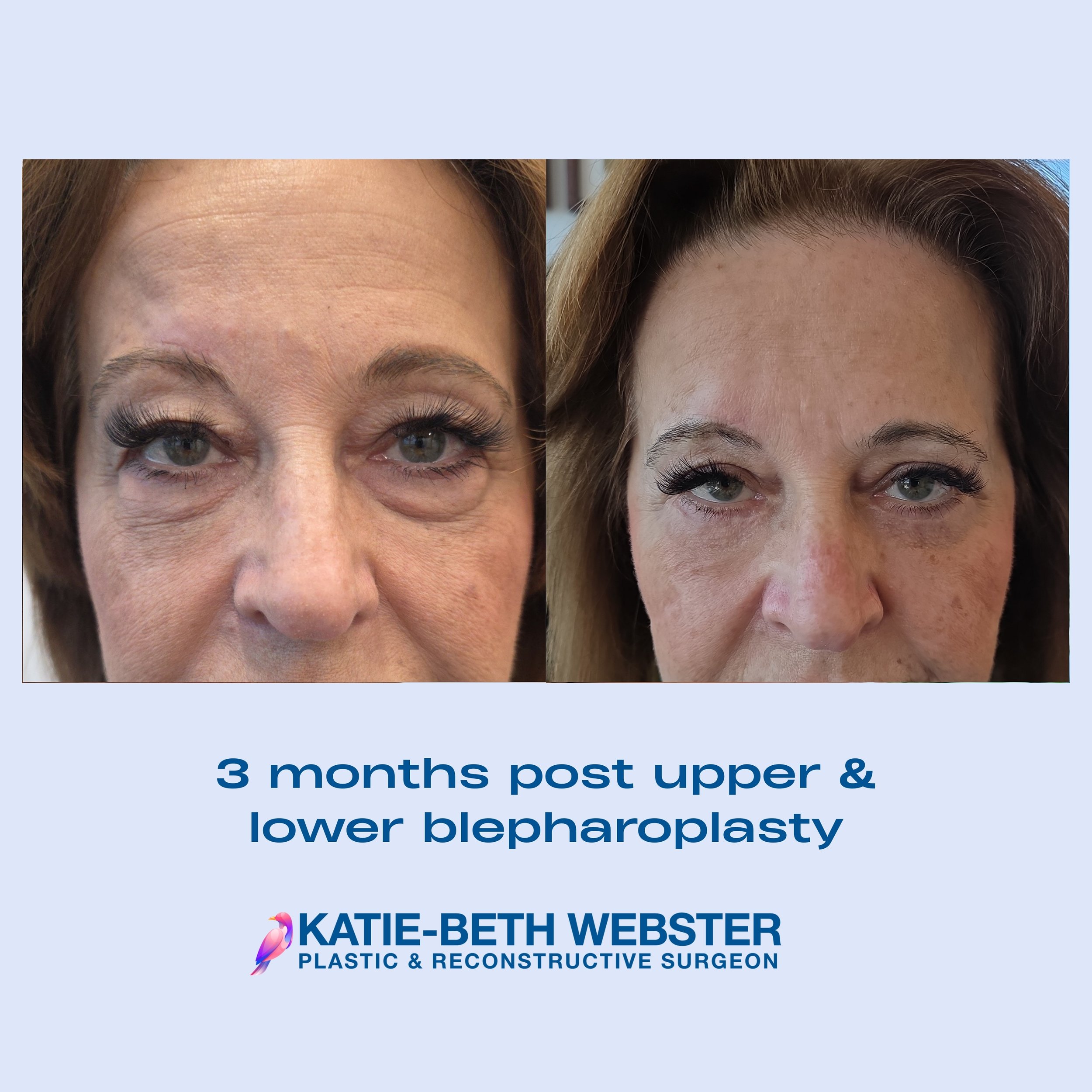
![Comparison photo showing the woman's face before and after a lower blepharoplasty, with improvements in under-eye puffiness and wrinkles.]()
Upper & Lower Blepharoplasty
-
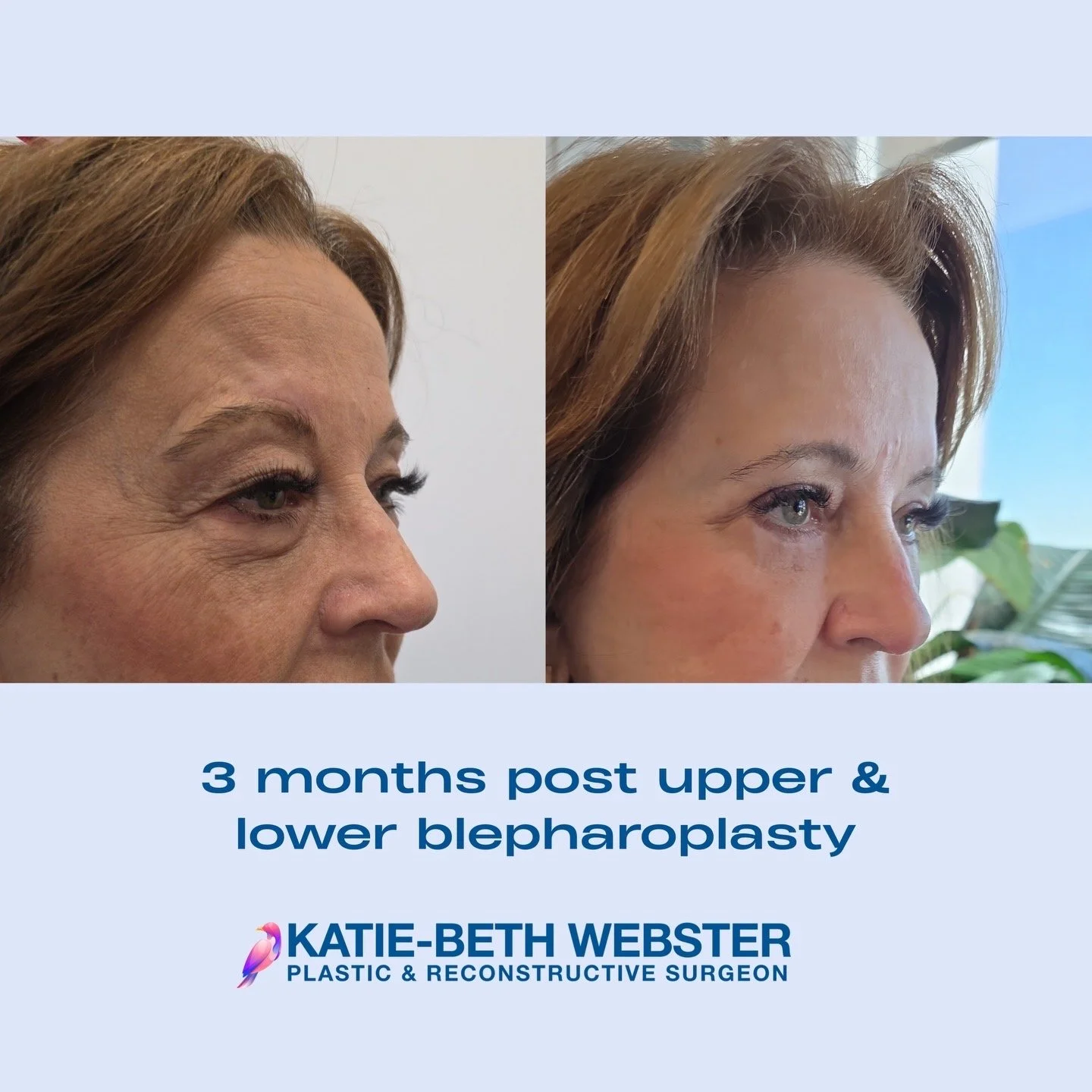
![Before and after images of a woman's face showing results 3 months post upper and lower blepharoplasty, with text indicating the procedure and a logo for Katie-Beth Webster, plastic and reconstructive surgeon.]()
Upper & Lower Blepharoplasty
-
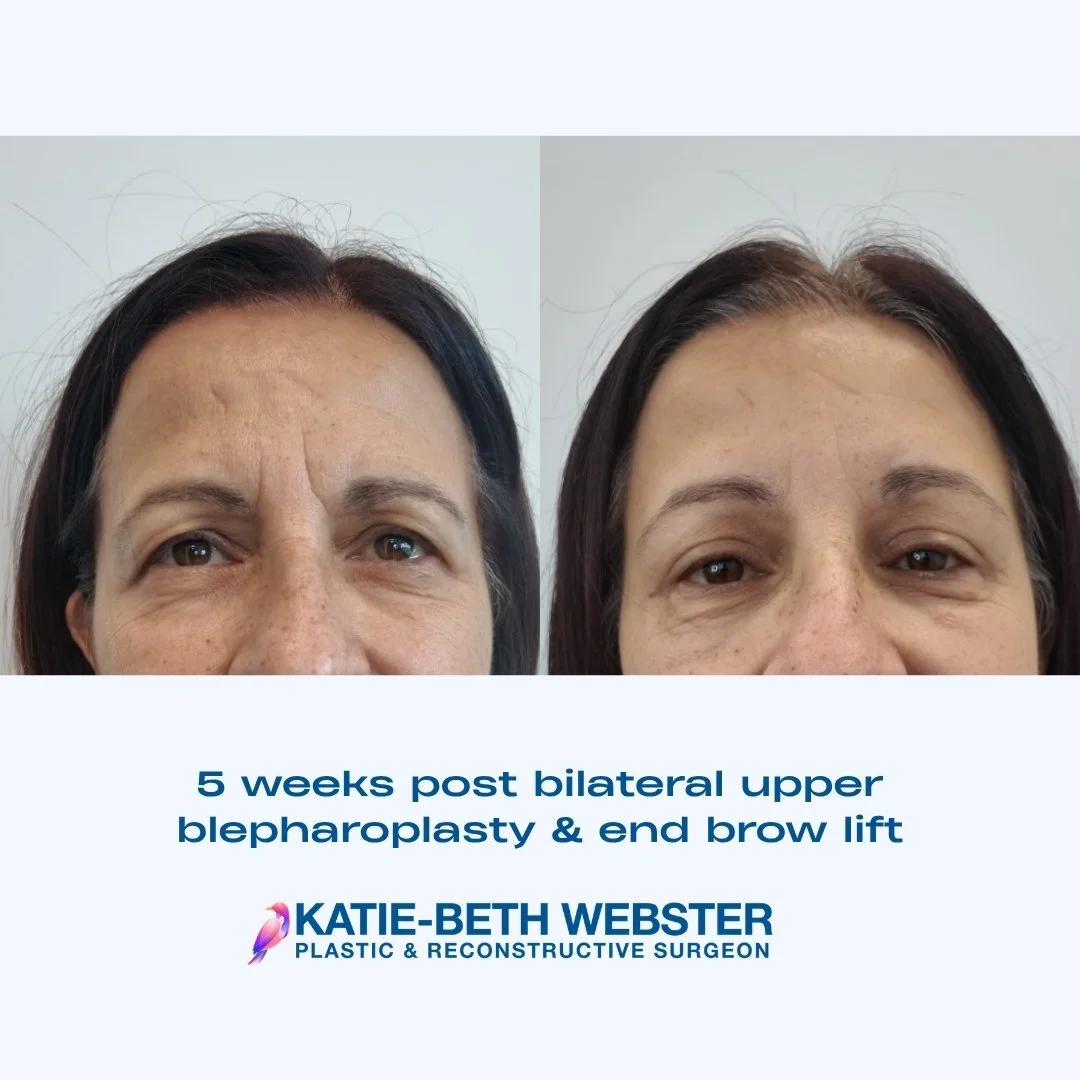
![Before and after photos of a woman showing results five weeks after bilateral upper blepharoplasty and end brow lift, with text indicating the procedure and surgeon's name.]()
Upper Blepharoplasty & End Brow Lift
-
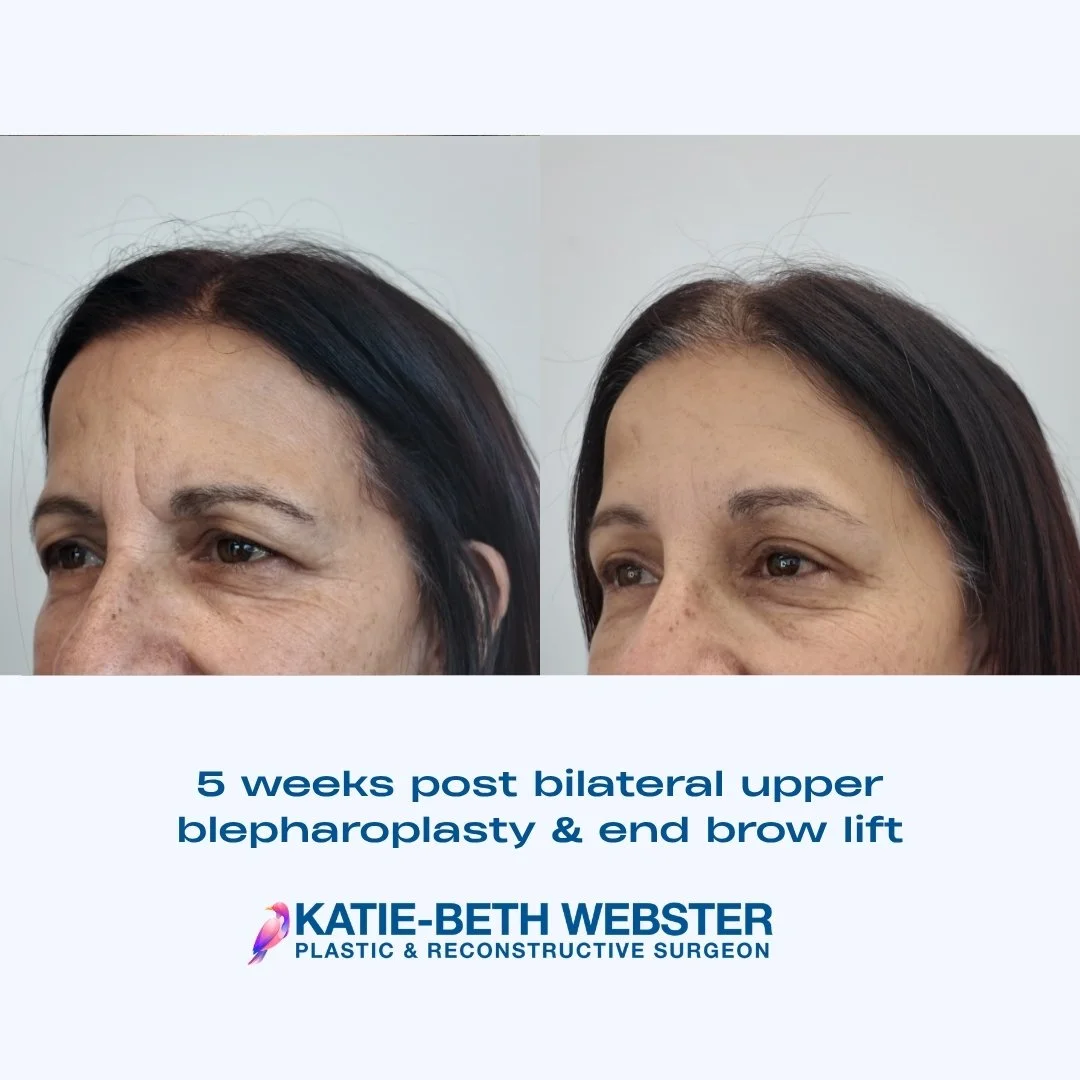
![]()
Upper Blepharoplasty & End Brow Lift