Breast Reduction
Personalised breast reduction surgery designed to reduce breast weight, improve proportion and address physical discomfort.
What is breast reduction surgery?
Breast reduction, also known as reduction mammoplasty, is a surgical procedure that removes excess breast tissue, fat and skin to reduce breast size and weight.
The remaining breast tissue is reshaped and elevated, and the nipple and areola are repositioned to suit the new breast contour. The procedure may help address physical symptoms associated with large or heavy breasts while also improving breast shape, symmetry and proportion.
Patients may consider breast reduction because of neck, shoulder or upper-back discomfort, bra-strap grooving, skin irritation, difficulty exercising or challenges finding comfortable clothing.
Dr Katie-Beth Webster will assess your breast anatomy, symptoms, general health and desired reduction before developing a surgical plan tailored to you.
Frequently Asked Questions
-
Patients may consider breast reduction if they are concerned by:
heavy breasts
neck, shoulder, or upper back discomfort
shoulder grooving from bra straps
skin irritation beneath the breasts
difficulty with exercise
difficulty finding clothing that fits comfortably
dissatisfaction with breast size and proportion
asymmetry in breast size or shape
-
A breast reduction consultation involves assessment of:
breast size and shape
degree of ptosis
skin quality and elasticity
nipple position
breast symmetry
breast examination for palpable abnormalities
body proportions
symptoms related to breast size
previous breast surgery
general medical history
family history of breast cancer
medications and smoking status
healing factors and recovery planning
The goal is to understand both the physical concerns and the desired change in size, shape, and proportion before deciding on the most appropriate surgical plan. When choosing your surgeon it’s important to ensure they are FRACS trained and have considerable experience in breast reduction surgery. This ensures they will be able to best address your aesthetic and functional goals.
-
Breast reduction may be used to improve:
excessive breast size
heaviness and weight
breast ptosis
poor body proportion
skin excess
asymmetry
physical discomfort associated with large breasts
The aim is not only to reduce size, but also to improve shape and overall balance.
-
Recovery varies between patients, but swelling, bruising, and discomfort are expected in the early postoperative period. The breasts may initially sit higher and feel firmer before gradually settling.
Most patients should expect:
swelling and bruising in the first one to two weeks
temporary discomfort or tightness
early changes in breast shape as the tissues settle
gradual improvement over the following weeks
scar maturation over a longer period
Final shape and softness take time to develop, and the breasts continue to settle after the early healing phase.
-
As with any operation, breast reduction surgery has risks and limitations. These vary depending on the exact procedure performed, the patient’s anatomy, and healing factors.
Risks and considerations discussed during consultation may include:
bruising and swelling
scarring
asymmetry
altered nipple sensation
wound healing delays such as T junction breakdown
fat necrosis
recurrence of laxity over time or with weight fluctuations
need for revision or additional reduction procedures in specific cases
A consultation is important to have the opportunity to discuss your goals, have the procedure explained in detail with the opportunity to ask questions and have guidance regarding what outcome can be expected.
-
Breast reduction usually includes reshaping and repositioning of the breasts, not just reduction in size.
-
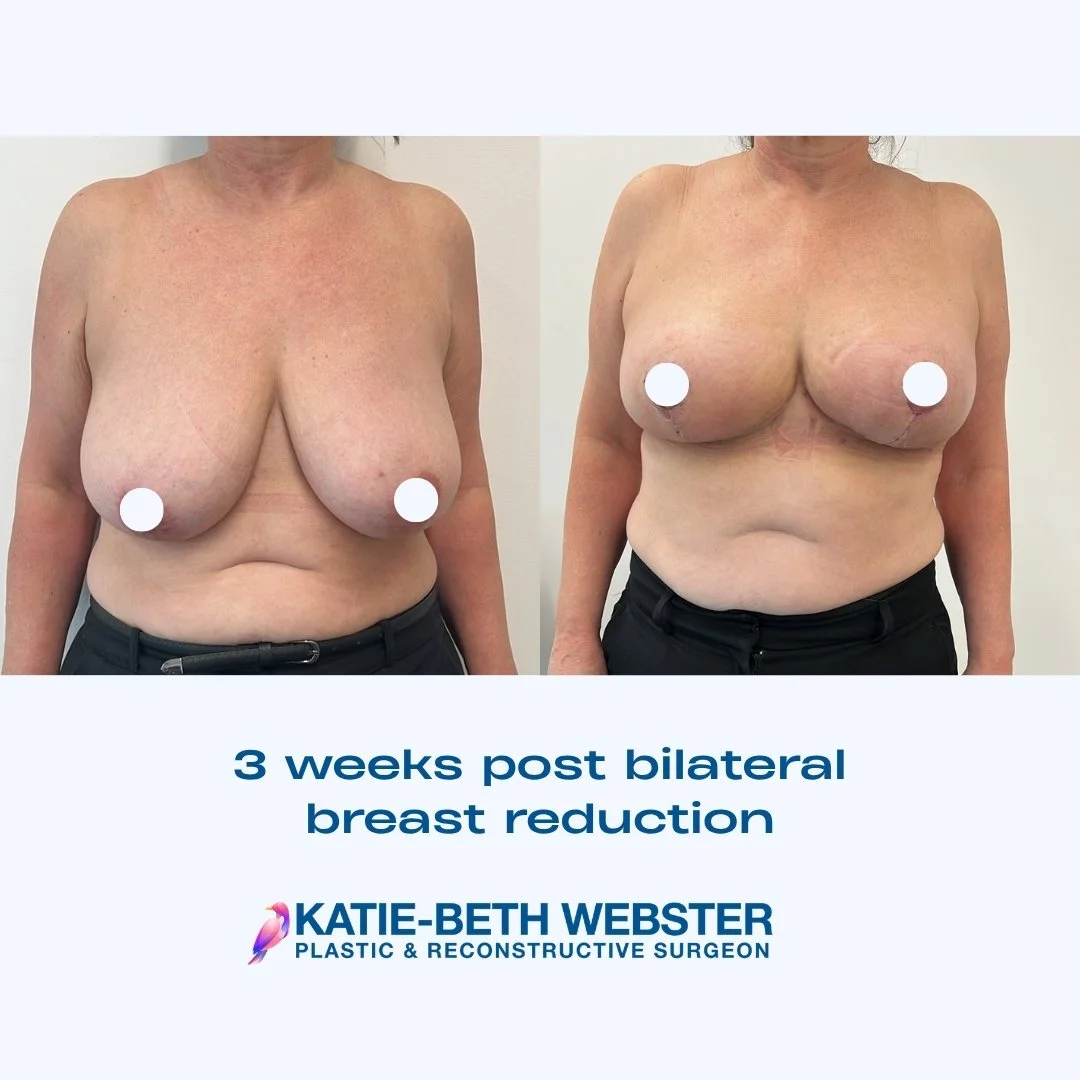
![Before and after images of a woman showing her chest, three weeks after bilateral breast reduction surgery by Dr. Katie-Beth Webster, plastic and reconstructive surgeon.]()
Bilateral Breast Reduction
-
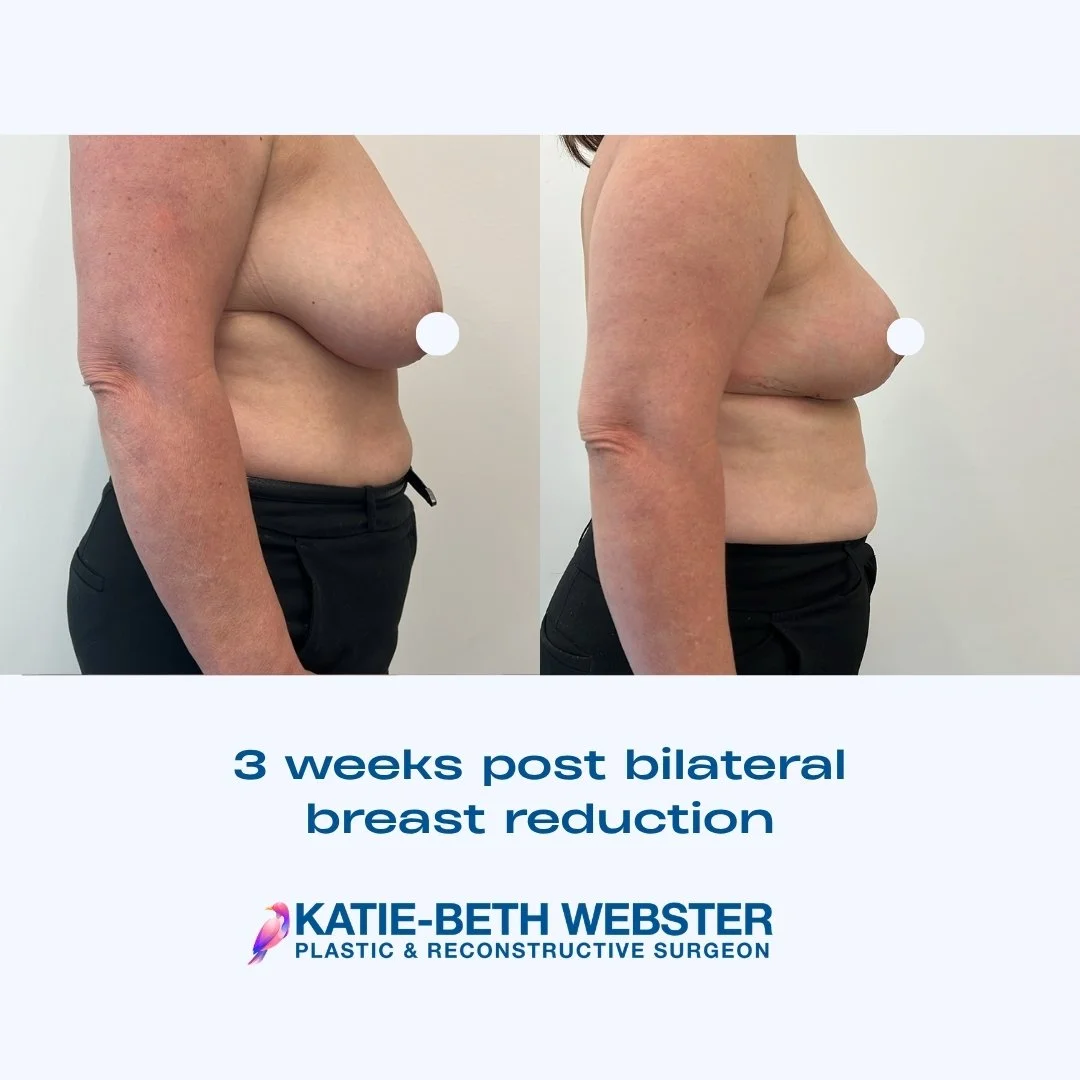
![Side-by-side before and after photos showing a woman's chest 3 weeks post bilateral breast reduction, with visible reduction in breast size.]()
Bilateral Breast Reduction
-
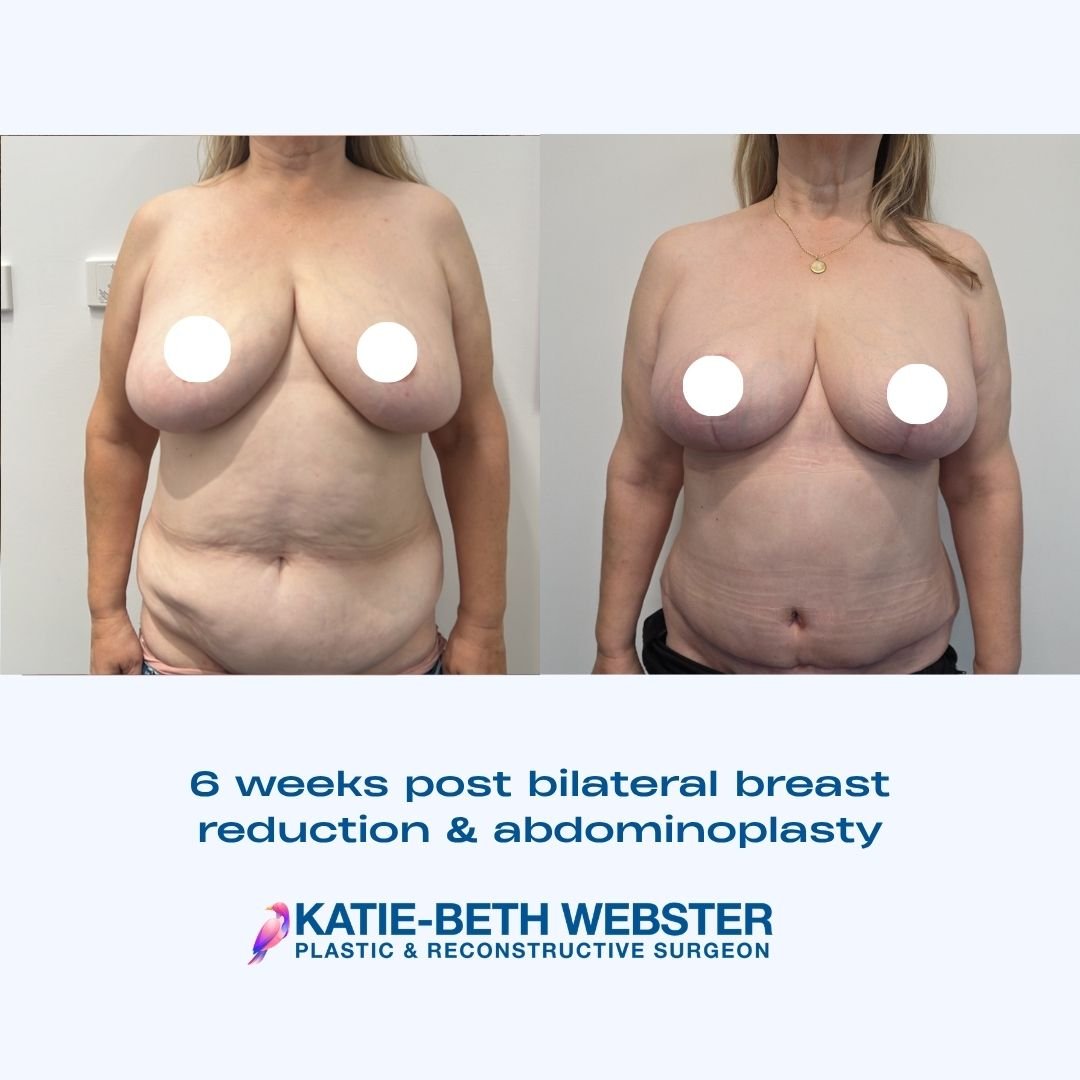
![]()
Bilateral Breast Reduction & Abdominoplasty
-
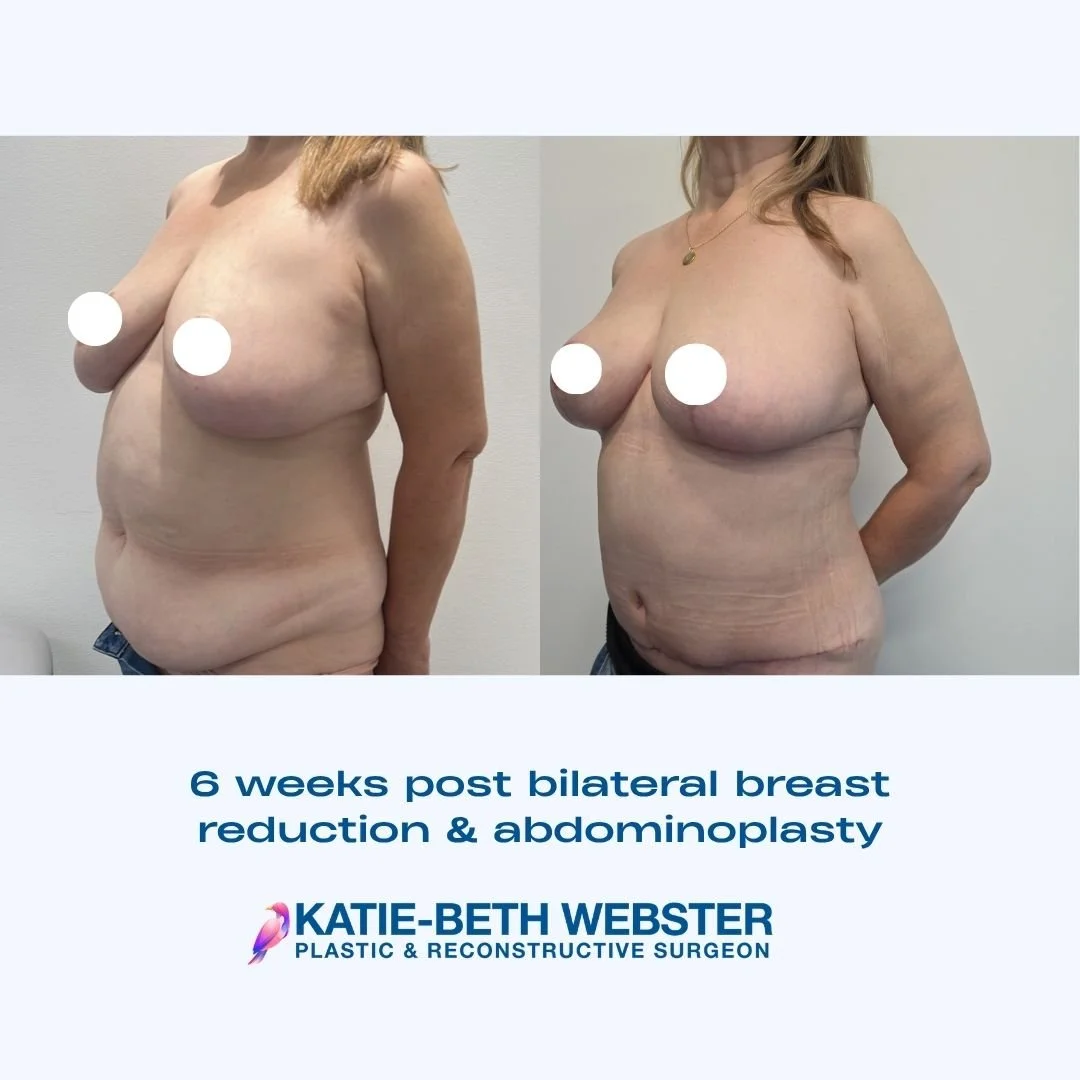
![Before and after images showing a woman's torso and breasts, six weeks post bilateral breast reduction and abdominoplasty, with text indicating the type of surgery and surgeon's name.]()
Bilateral Breast Reduction & Abdominoplasty