Breast Augmentation
Personalised breast augmentation designed around your anatomy, proportions and individual goals.
What is a breast augmentation?
Breast augmentation is a surgical procedure that uses breast implants to increase volume and change the shape or proportions of the breasts.
It may be considered by patients who would like to increase their natural breast size, restore fullness following pregnancy, breastfeeding or weight change, improve asymmetry or create greater fullness through the upper part of the breast.
Breast augmentation is not a one-size-fits-all procedure. Implant size is only one part of the decision. Your treatment plan may also involve choices around implant shape, profile and placement, incision position and whether fat grafting or a breast lift should be considered.
Planning your breast augmentation
Implant size and profile
The most appropriate implant is chosen according to your chest width, existing breast tissue, skin characteristics, body proportions and preferred degree of fullness and projection.
Rather than selecting an implant based on cup size alone, Dr Webster will help you consider how different dimensions and profiles may look on your individual frame.
Implant placement
An implant may be positioned above the chest muscle, beneath it or using a combined approach.
The recommended position depends on factors such as your existing tissue coverage, implant selection, activity levels, chest anatomy and desired result.
Implant shape
Implants are available in different shapes. The appropriate option will depend on your anatomy, the breast contour you would like to achieve and the implants available for your procedure.
Dr Webster will explain the benefits and limitations of the suitable options during your consultation.
Fat grafting
Fat grafting may sometimes be used alongside breast implants to soften the breast contour, improve cleavage or provide additional coverage in selected areas.
It is not required for every patient and will only be recommended where it is likely to add value to the overall result.
Your breast augmentation journey
Every breast augmentation is planned individually. Understanding the stages of consultation, surgery and recovery can help you feel more prepared and make informed decisions about your treatment.
-
Your consultation begins with a discussion about what you would like to change and the result you hope to achieve.
Dr Webster will assess your breast size and shape, nipple position, symmetry, skin quality, existing breast tissue, chest wall proportions and any previous breast surgery. Your medical history, medications, smoking status and factors that may affect healing will also be reviewed.
You will discuss implant dimensions, profile, shape and placement, as well as the location of the surgical incision. Dr Webster will explain what is realistically achievable for your anatomy and whether augmentation alone is likely to meet your goals.
Where there is breast descent or loose skin, she may also discuss whether a breast lift would provide a more suitable result.
-
Breast augmentation is performed under general anaesthesia in an accredited hospital setting.
An incision is commonly positioned within the fold beneath the breast, although the recommended incision will depend on your anatomy and surgical plan. A pocket is then created for the implant, either above or partly beneath the chest muscle.
The selected implants are inserted and their position and breast symmetry are carefully assessed before the incisions are closed.
Fat grafting may also be performed in selected cases to refine the shape or improve soft-tissue coverage.
The duration of surgery and whether you return home the same day or remain overnight will depend on your individual procedure and circumstances.
-
Swelling, tightness, bruising and discomfort are expected during the early stages of recovery. The breasts may initially sit higher and feel firmer than expected before gradually settling.
You will usually wear a supportive postoperative bra and will need to avoid heavy lifting, strenuous exercise and upper-body training while healing.
Many patients can return to light activities and desk-based work within approximately one to two weeks, although recovery varies. Dr Webster will provide guidance based on your procedure, work and healing progress.
Breast shape and softness continue to change over the following weeks and months as swelling resolves and the implants settle. Scars also take time to mature and fade.
Why choose Dr Katie-Beth Webster?
As a specialist plastic surgeon, Dr Katie-Beth Webster provides detailed, individualised assessment and surgical planning for breast augmentation.
She will guide you through the available implant options, explain the benefits and limitations of different approaches and help you understand how your anatomy may influence the result.
The consultation process also includes a balanced discussion of scars, recovery, implant-related considerations and the possibility of further surgery in the future, allowing you to make a properly informed decision.
Her focus is on evidence-based care, clear communication and developing a treatment plan that is proportionate and appropriate for the individual patient.
Considering breast augmentation?
A consultation with Dr Katie-Beth Webster provides an opportunity to discuss the changes you are considering, explore the available implant and surgical options and receive advice tailored to your anatomy and goals.
Dr Katie-Beth Webster offers breast augmentation consultations in Melbourne, with appointments available in Box Hill and East Melbourne.
Common questions about breast augmentation
-
Breast augmentation and breast lift surgery address different concerns.
Breast augmentation primarily adds volume and may be suitable when your main concern is limited breast fullness and the nipple remains in an appropriate position. A breast lift reshapes and elevates the breast and may be more appropriate when there is significant breast descent, stretched skin or a lower nipple position.
Some patients may benefit from combining a breast lift with implants to address both breast position and volume. However, a combined procedure involves additional scars, complexity and risks.
Dr Katie-Beth Webster will assess your breast tissue, skin quality, nipple position and treatment goals during your consultation and explain which approach is most appropriate for you.
-
Implant selection is based on your anatomy rather than cup size alone.
Dr Webster will consider your chest width, existing breast tissue, skin quality, breast proportions and preferred degree of fullness and projection. Implant diameter and profile are particularly important because they influence how the implant sits on your chest and how much it projects forward.
You will discuss the suitable options during your consultation. The aim is to select an implant that works with your tissues and proportions while moving towards the breast shape you would like to achieve.
-
Breast implants may be positioned above the pectoral muscle, partly beneath it or using another combined approach.
Implant placement depends on factors including the amount of existing breast tissue, implant size, chest anatomy, lifestyle and the contour being planned.
Placement beneath the muscle can provide additional implant coverage for some patients, while placement above it may be appropriate where there is sufficient natural tissue. Each option has advantages and limitations, which Dr Webster will explain during your consultation.
-
Some patients can breastfeed after breast augmentation, but this cannot be guaranteed.
Breastfeeding depends on several factors, including pre-existing breast anatomy, glandular tissue, surgical technique and individual milk production. Surgery may affect nipple sensation or milk supply in some patients.
Tell Dr Webster about any future pregnancy or breastfeeding plans so these can be considered during surgical planning.
-
Breast implants can add volume and improve breast shape, but they do not reliably correct significant breast descent or loose skin.
Where the nipple sits lower on the breast or the skin has stretched considerably, a breast lift may be required to reposition and reshape the breast. Some patients may benefit from a breast lift alone, while others may require a combined augmentation and lift.
Dr Webster will assess your nipple position, breast tissue and skin quality before advising which approach is most suitable.
-
Tightness, pressure, swelling, bruising and discomfort are common during the early recovery period.
The breasts may initially appear high or firm. This gradually improves as swelling settles and the tissues relax around the implants.
Pain relief and detailed postoperative instructions will be provided. You will need to limit lifting and upper-body activity and wear the recommended supportive garment while healing.
Severe or worsening pain, sudden swelling or other unexpected symptoms should be reported promptly.
-
You should continue routine breast screening based on your age, medical history and individual risk factors.
Breast implants can affect how mammograms are performed, so always tell the radiographer that you have implants. Additional imaging views or another form of imaging may sometimes be required.
Any new breast lump, swelling, pain or change in breast shape should be assessed rather than assumed to relate to the implant.
-
The body naturally forms a layer of scar tissue, known as a capsule, around a breast implant.
In some patients, this capsule becomes unusually firm or tight. This is called capsular contracture and can cause the breast to feel hard, change shape, sit differently or become uncomfortable.
The severity varies, and some cases may require further surgery to treat the capsule or replace or remove the implant.
-
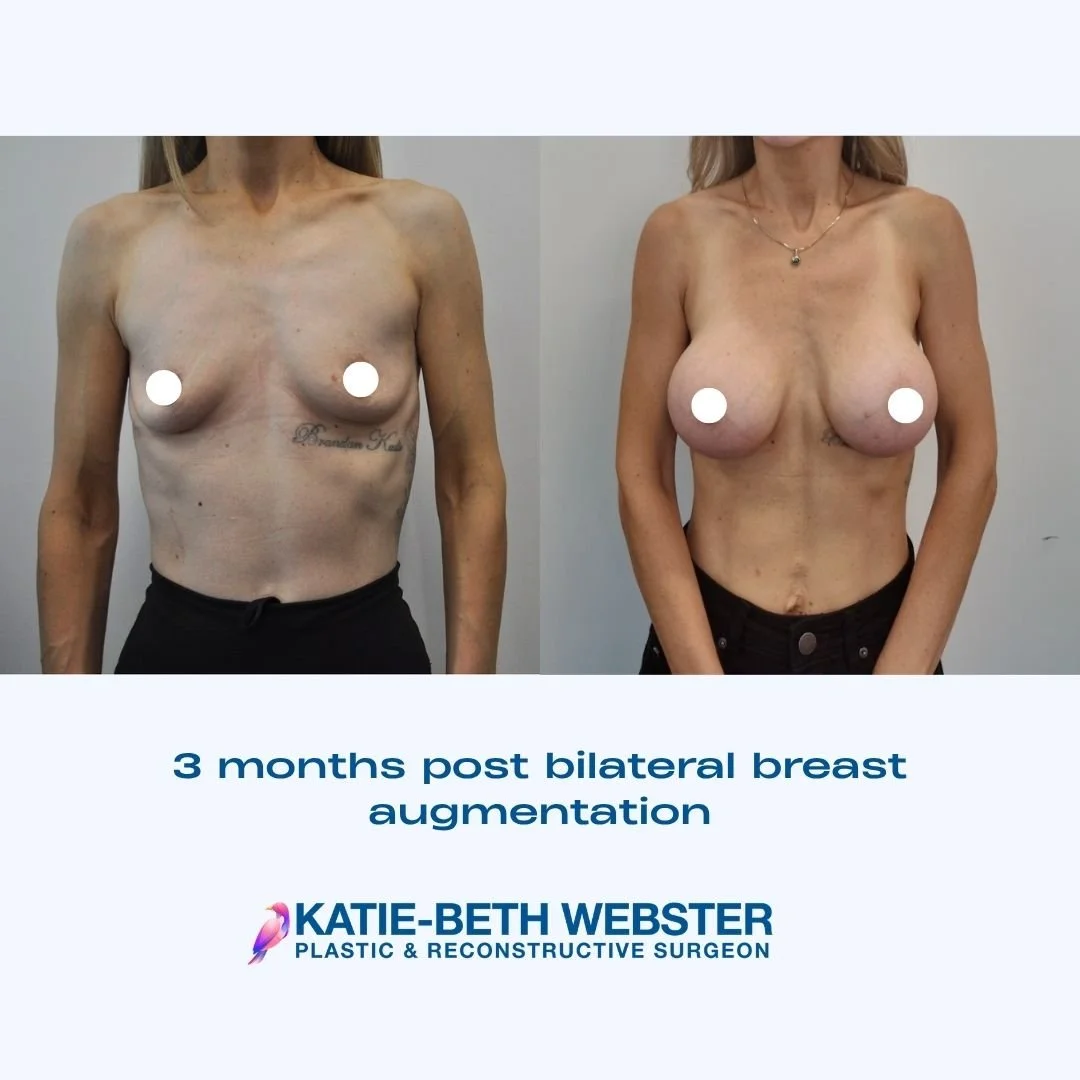
![Before and after images of a woman showing her chest, three months after bilateral breast augmentation surgery by Dr. Katie-Beth Webster, plastic and reconstructive surgeon.]()
Bilateral Breast Augmentation
-
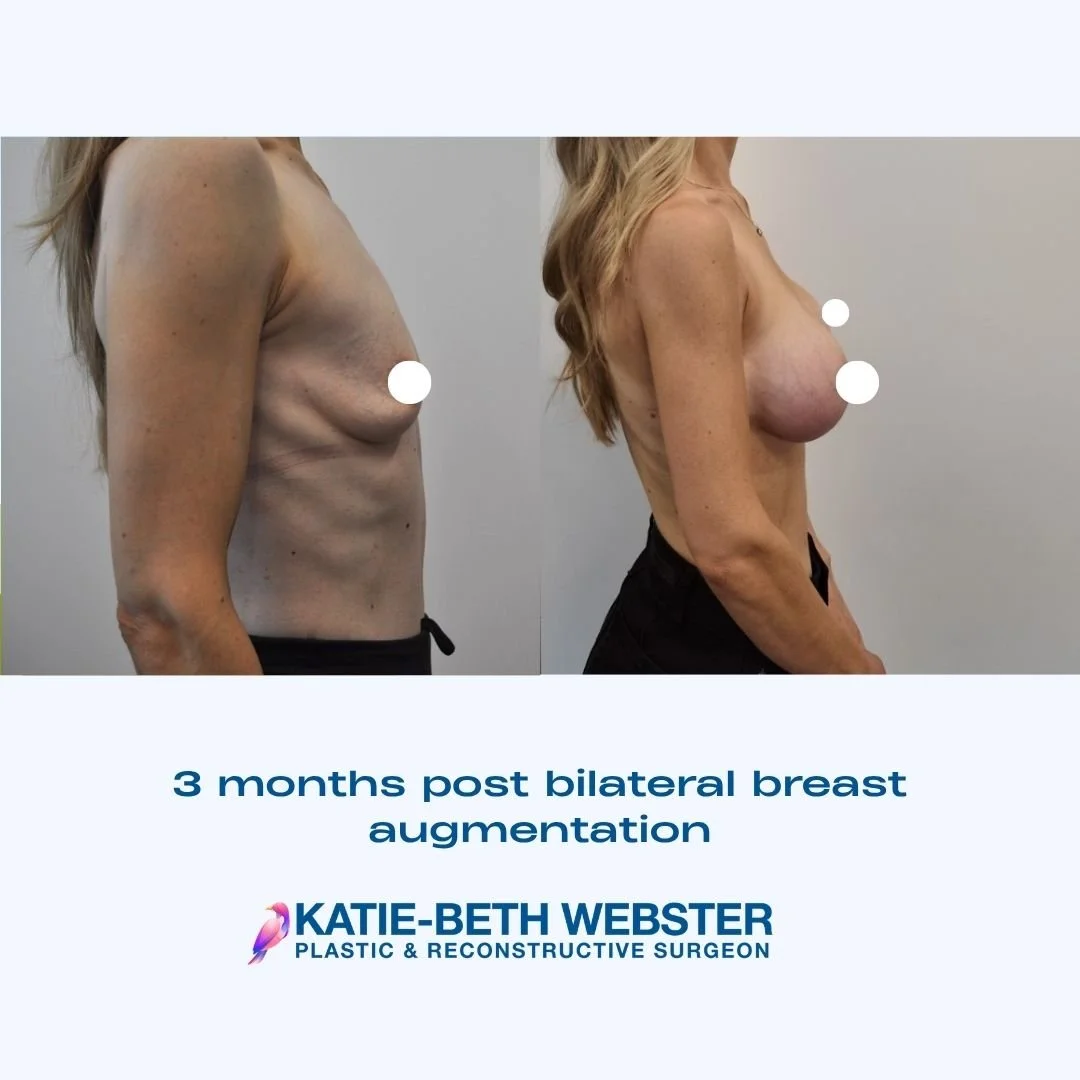
![Side-by-side before and after photos showing a woman's chest 3 months post breast augmentation, showing an increase in size]()
Bilateral Breast Augmentation
-
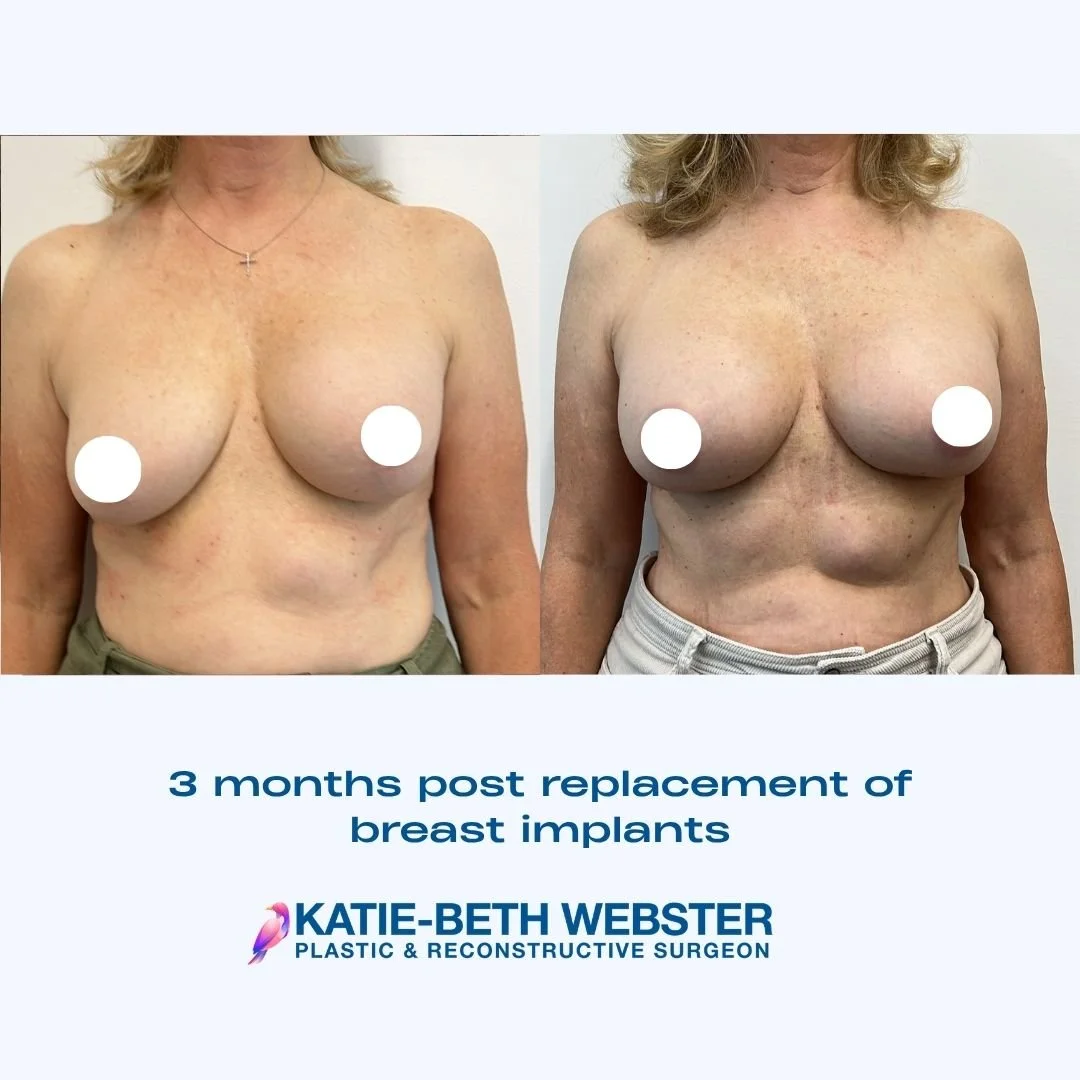
![]()
Replacement of Breast Implants
-
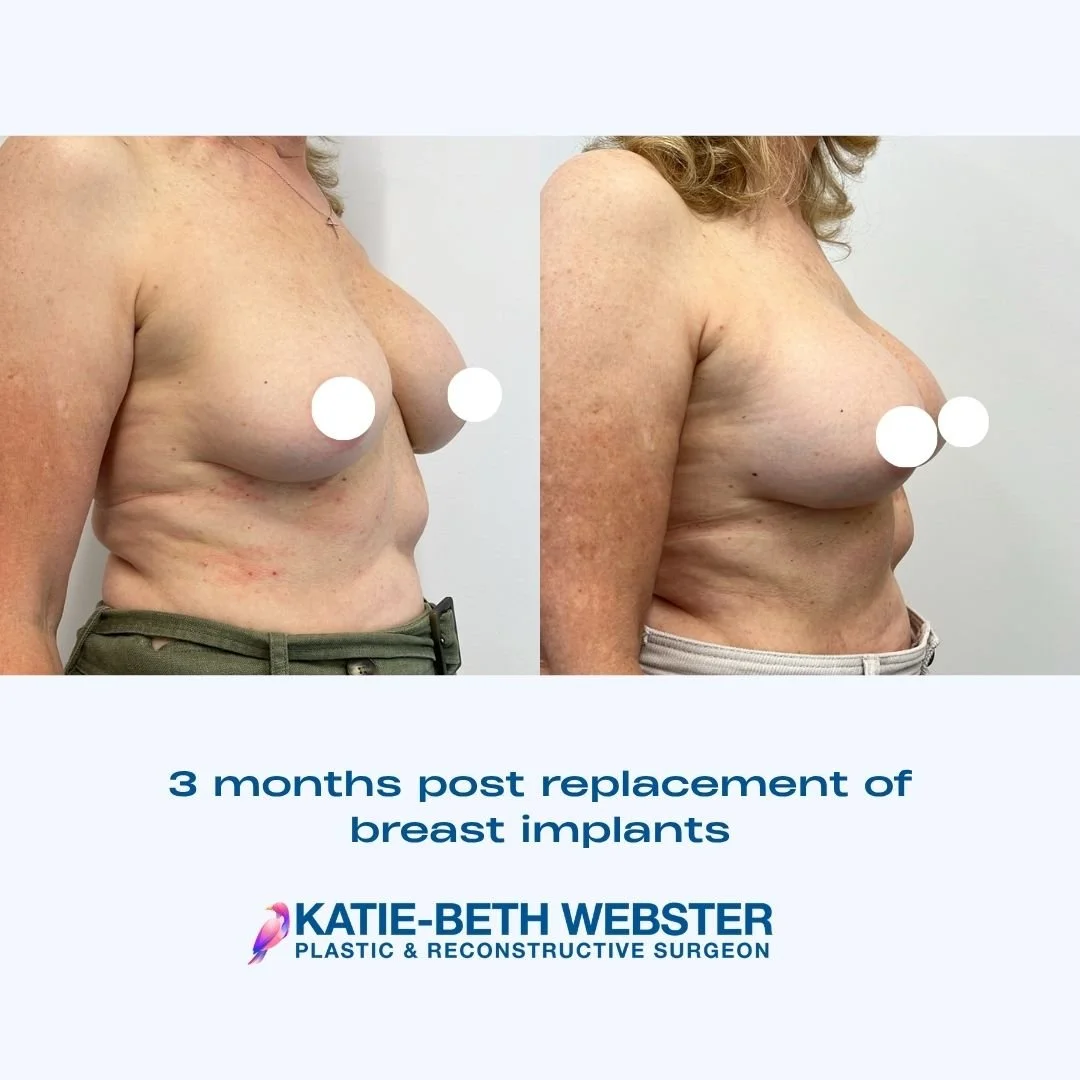
![Side-by-side before and after photos of a woman showing results three months after breast implant replacement, with the woman topless.]()
Replacement of Breast Implants
-
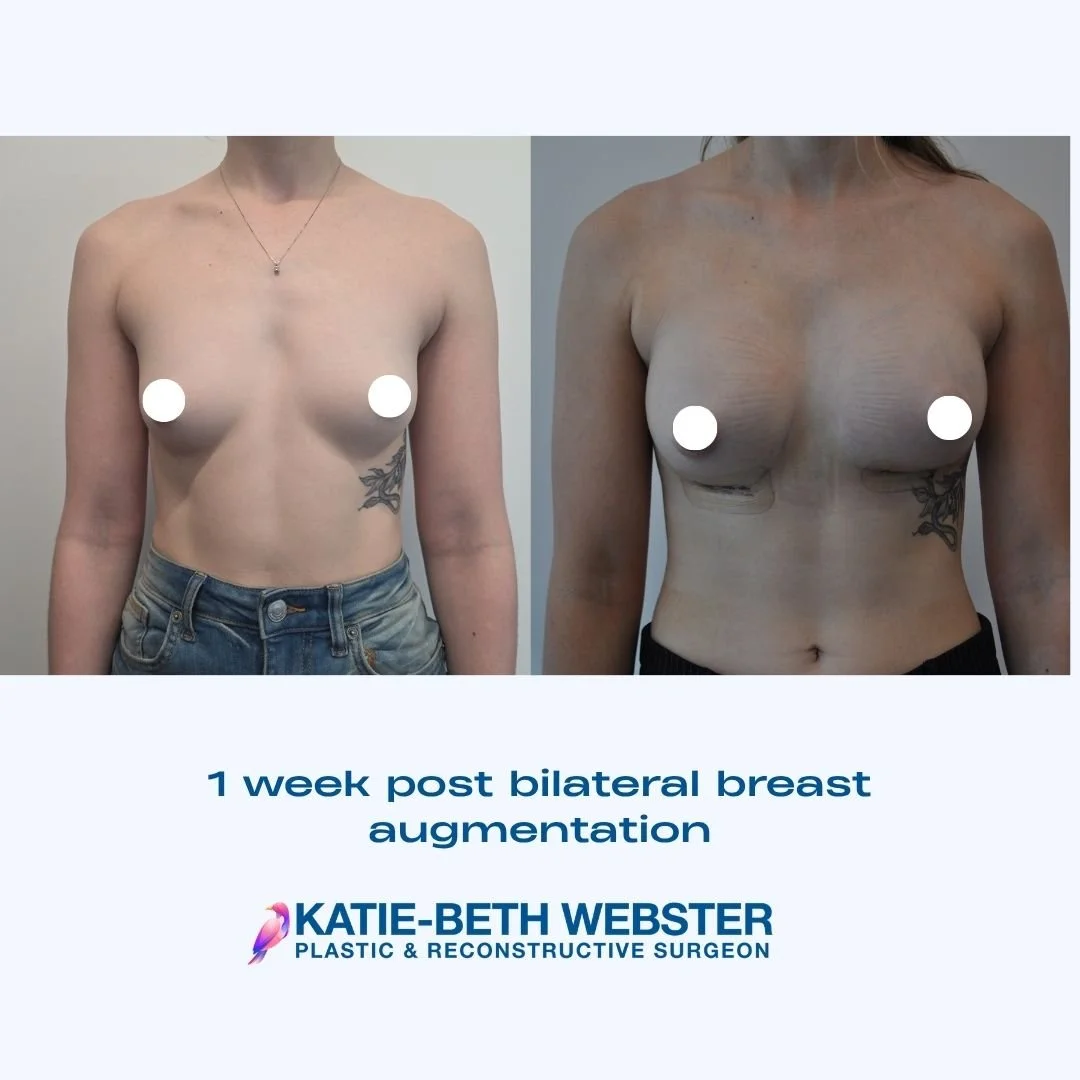
![Before and after photos of a woman showing her chest one week after bilateral breast augmentation, with text indicating the procedure by Katie-Beth Webster, plastic and reconstructive surgeon.]()
Bilateral Breast Augmentation
-
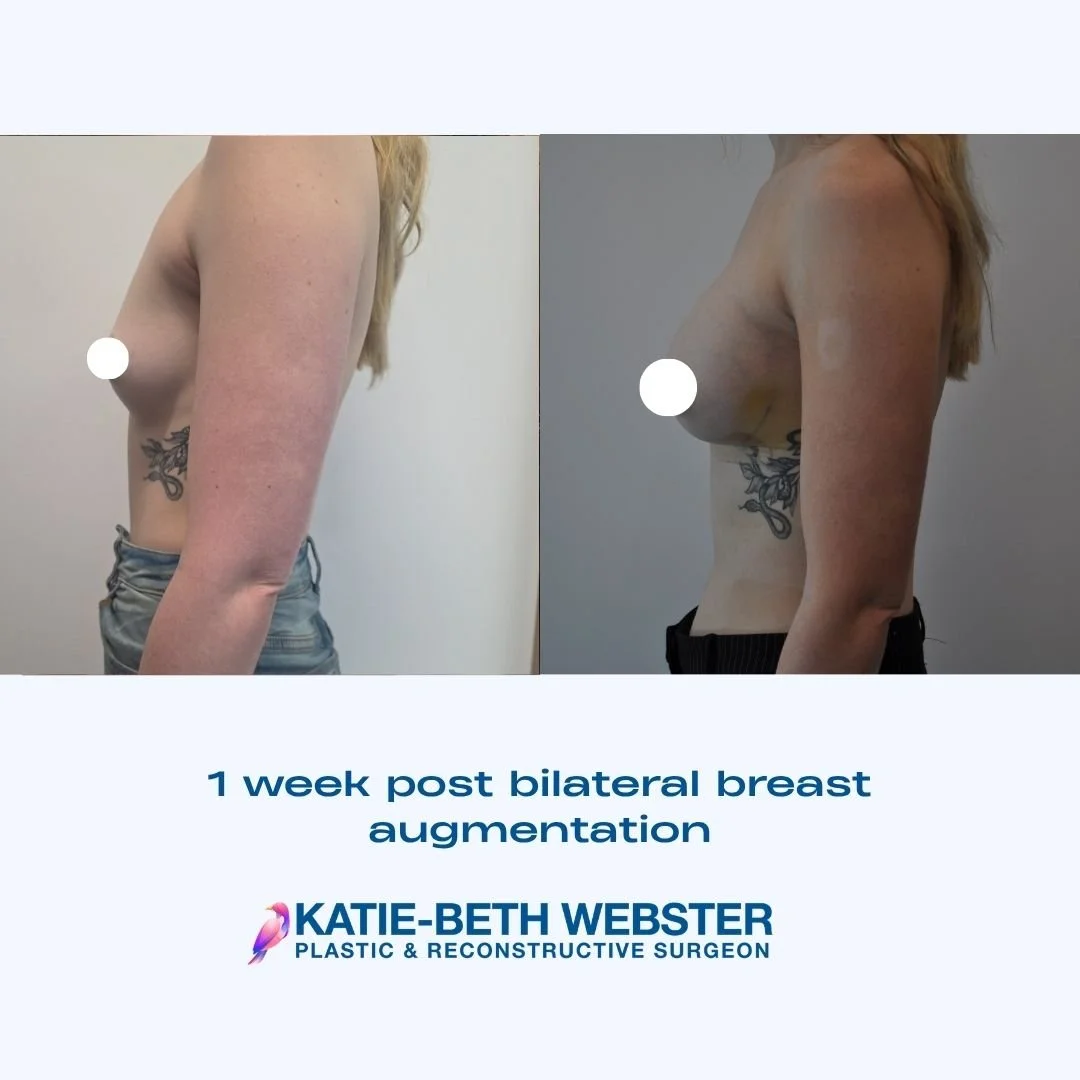
![Side-by-side comparison of a woman's upper body before and after one week of bilateral breast augmentation, showing increased breast size on the right.]()
Bilateral Breast Augmentation